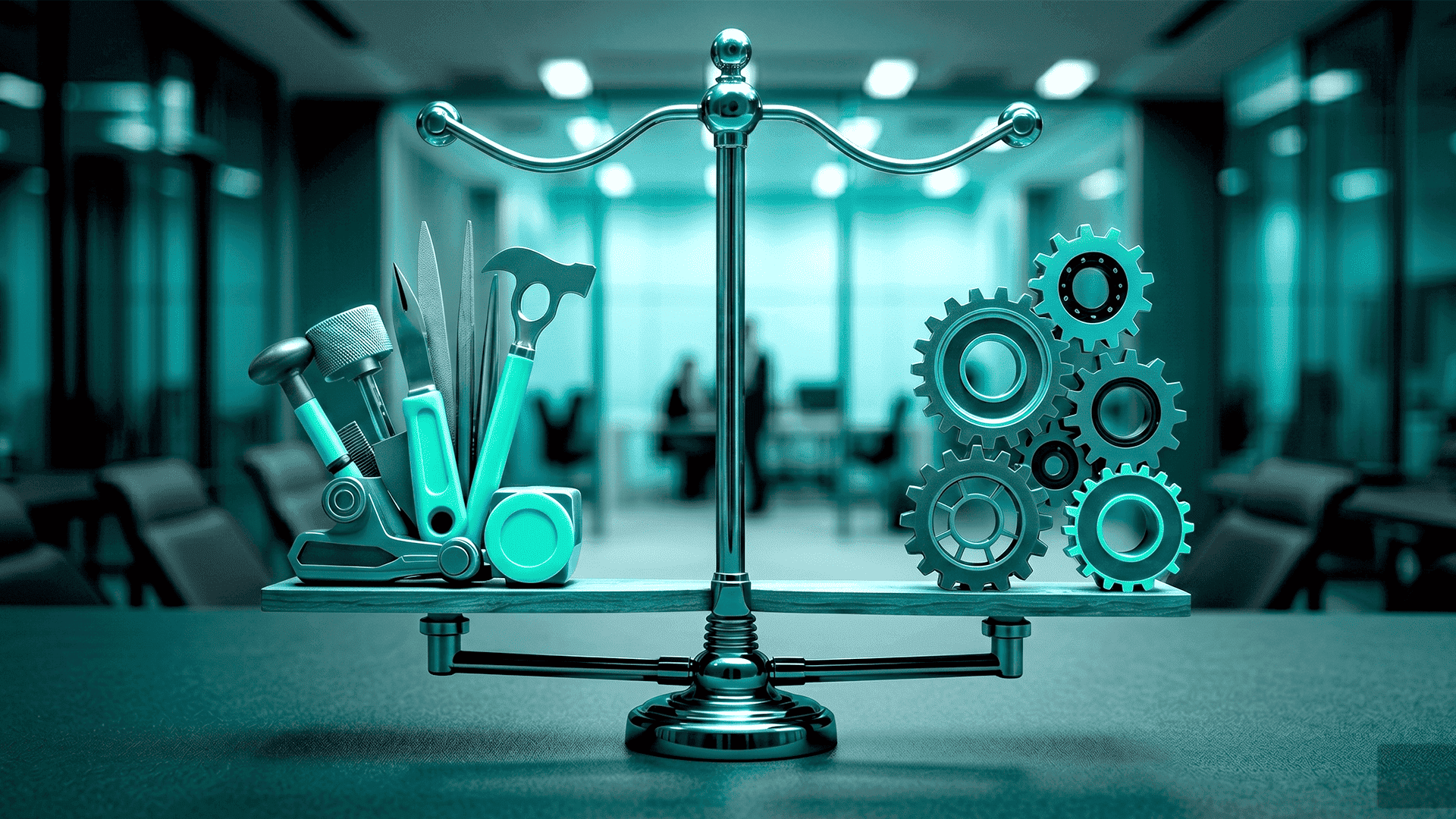
In modern work environments, particularly within small and medium-sized organizations, multitasking has become a common practice linked to the need for flexibility, cost control, and better use of employees’ time. Instead of relying on narrow job roles, some organizations are expanding the scope of employee responsibilities, allowing them to handle a variety of tasks as needed.
However, multitasking is not a suitable solution in all cases. It may support efficiency and adaptability when managed with clarity and structure, but it can weaken focus and performance quality when it becomes a constant burden or a substitute for proper planning. Therefore, the central question is not whether multitasking is good or bad, but how well it fits the nature of the work and the organization’s ability to manage it effectively.
Why Do Organizations Rely on Multitasking?
Many organizations, especially small ones or those in a growth stage, rely on multitasking because they cannot always hire a separate specialist for every function or activity. In this case, an employee who can handle more than one responsibility becomes an important contributor to business continuity.
For example, an employee may combine customer service, administrative follow-up, internal coordination, and some basic operational tasks. This model helps the organization work with more flexible teams, respond to changes in workload throughout the day, and reduce waiting or downtime caused by limited role availability.
Multitasking can contribute to:
- Improving the use of working time.
- Reducing downtime between tasks.
- Supporting operational continuity.
- Expanding employees’ experience.
- Reducing the need to hire specialists for every small function.
In this sense, multitasking can be a useful tool for organizations that need a higher degree of operational flexibility.
When Does Multitasking Become a Challenge?
Despite its benefits, multitasking requires careful management. The issue is not always the diversity of responsibilities, but the continuous shifting between many overlapping tasks without clear priorities or a realistic assessment of time and effort.
When employees are asked to complete several tasks at the same time, their level of focus may decline. Errors may increase, or tasks that require deeper analysis and sustained attention may be delayed. Excessive reliance on multitasking may also limit opportunities for specialization, making performance broad but not sufficiently deep in some important areas.
Key challenges associated with multitasking include:
- • Reduced focus in tasks that require high accuracy.
- • Difficulty prioritizing when responsibilities overlap.
- • Increased likelihood of errors due to frequent task-switching.
- • Weaker specialization in some important areas.
- • Higher pressure when support or planning is absent.
Therefore, multitasking should not be used as a substitute for proper staffing or clear role design. Rather, it should be treated as an organizational tool used only in situations where it is appropriate.
The Impact on Employees and the Organization
When employees are asked to perform multiple tasks without clear priorities or sufficient support, pressure begins to accumulate. Over time, employees may feel that they are expected to complete everything within a short period, without enough space to focus, learn, or improve the quality of their work.
This may lead to:
- • Lower quality of outputs.
- • Reduced job satisfaction.
- • Weaker initiative.
- • Increased fatigue.
- • Higher likelihood of employee turnover.
In such cases, the organization does not lose time only. It may also lose trust, commitment, and the accumulated knowledge within the team. An employee who constantly works under the pressure of overlapping tasks may become less able to think deeply and less willing to contribute improvement ideas or take on additional responsibilities.
The organization itself may also be affected when multitasking becomes an unstructured practice. Decisions may slow down, quality may become inconsistent, and responsibilities may become unclear. This can affect customer experience, internal coordination, and the organization’s ability to grow in a healthy way.
How Can Organizations Manage Multitasking Effectively?
Multitasking succeeds when it is intentional and organized, not when it results from poor planning or daily operational pressure. Leaders need to identify the roles that require flexibility, the tasks that require focus, and the limits that should not be exceeded so that quality and employee morale are not affected.
Organizations can manage multitasking through:
- Clear definition of responsibilities and expectations.
- Prioritizing tasks according to importance and impact.
- Providing appropriate training for employees.
- Reducing unnecessary interruptions.
- Allocating time for tasks that require deep focus.
- Monitoring workload and indicators of pressure and fatigue.
- Reviewing roles regularly as the organization grows and its needs change.
In this way, multitasking becomes part of work design, rather than a random outcome of work pressure. This approach also helps achieve a balance between the flexibility required and the quality expected.
Multitasking can be useful for small and growing organizations when it is used to support flexibility, improve operational continuity, and make better use of available capabilities. However, it requires conscious management so that it does not become a burden that weakens focus, affects performance quality, and increases pressure on employees.
The most effective organizations neither rely on multitasking without limits nor reject it completely. Instead, they use it selectively and balance flexibility with specialization, efficiency with performance quality, and business needs with employee well-being. Ultimately, the value of multitasking does not lie in increasing the number of responsibilities, but in organizing work in a way that achieves better results without weakening long-term organizational capability.