
Performance management has long been shaped by the assumption that measurement drives improvement. Today, organizations track more indicators than ever, supported by automated reporting and dashboards. Yet the key question remains: does more data consistently lead to better decisions and stronger outcomes?
Rethinking Measurement
The widely quoted phrase “what gets measured gets managed” is often misunderstood. Originally intended as a warning, it highlights the risk of focusing on metrics rather than outcomes. Measurement maturity is not defined by data volume, but by the ability to extract insight and guide action. Without this capability, measurement risks becoming an administrative exercise rather than a performance enabler.
The Performance Gap: Data vs. Insight
Despite widespread investment in performance measurement, many organizations struggle to convert data into meaningful results.
- In the UK Government’s major projects portfolio, 115 of 244 projects reported monetised benefits (about 47%), highlighting uneven benefits reporting and valuation.
- In the public sector, OECD data shows 71% of member countries implementing performance budgeting use performance information to inform annual budget allocations.
- However, only about one-third of member countries (32%) extend the use of performance information to multi-year budget planning, limiting its strategic impact.
The issue is not the availability of data, but the integration of performance information into everyday management decisions.
Why Some Organizations Outperform Others
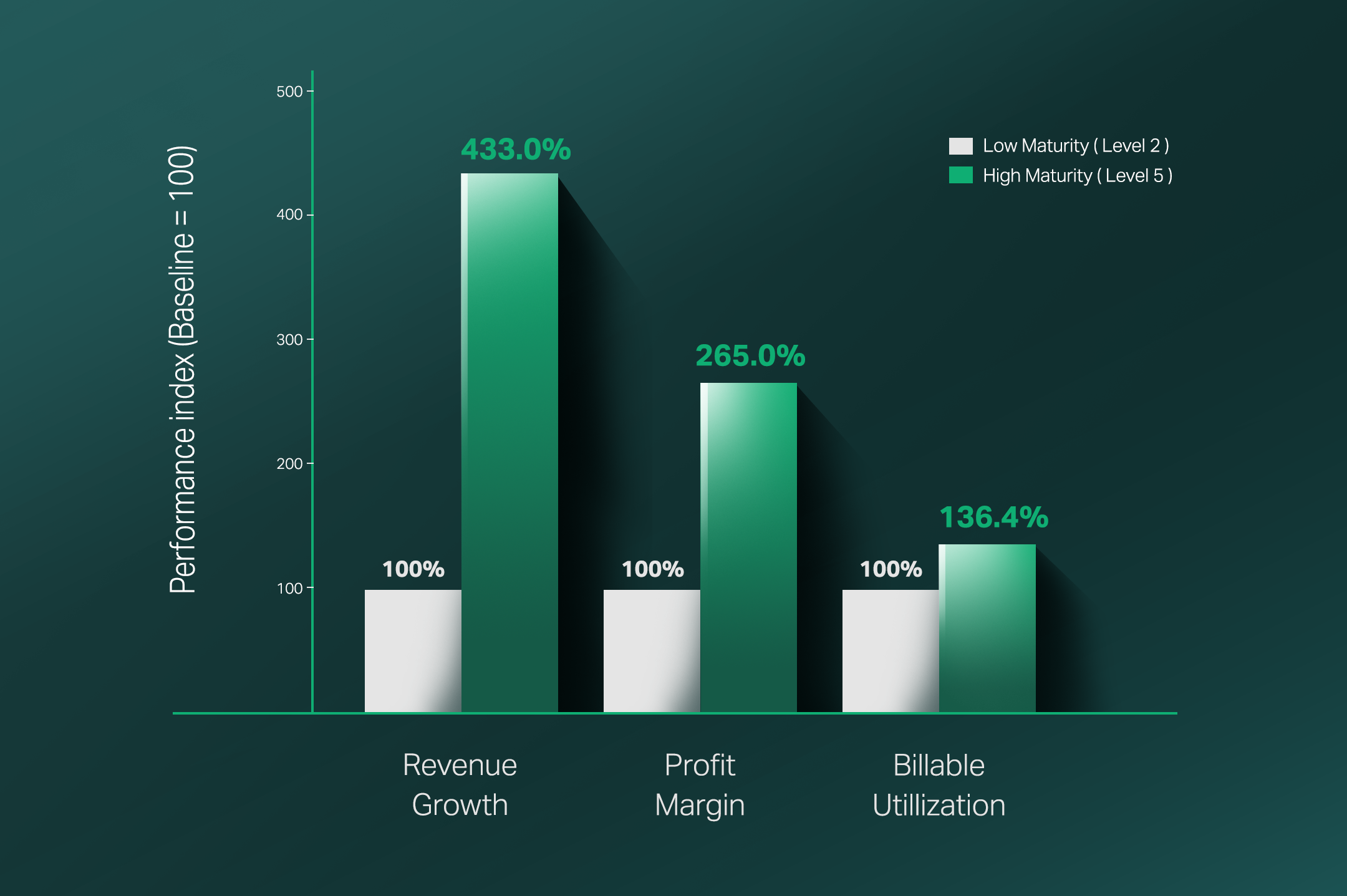
The difference lies in how performance is reviewed. Organizations that treat KPIs as active management tools, rather than static reporting requirements, consistently achieve stronger results. The chart below shows how higher measurement maturity translates into better performance across key indicators.
 Moving from Reporting to Strategic Insight
Bridging the gap between measurement and results requires a deliberate shift in focus. Data availability alone does not drive improvement; leadership engagement and analytical capability do.
Three practices consistently enable high-value measurement:
1. Prioritize Quality Over Quantity
Focus on a limited set of indicators that directly reflect strategic goals, rather than overwhelming teams with excessive metrics.
2. Establish a Review Rhythm
Replace infrequent, retrospective reporting with regular, structured discussions that inform planning and corrective action.
3. Empower Decision-Makers
Ensure those accountable for outcomes have both access to performance insights and the authority to act on them.
Ultimately, performance improvement depends less on the extent of measurement and more on the quality of its use. In an era of data abundance, the organizations that thrive will be those that master the art of turning numbers into knowledge.